How do pile driving machines contribute to site productivity?
Productivity is broader than the number of blows in a shift. The real value on site is consistently completing measured and accepted work at the required quality.
Measure the complete cycle
Installing a post involves moving the machine, preparing the material, positioning, pile driving and measuring. Reducing pile driving time alone may have limited effect on daily output if other steps involve long delays.
Record these steps separately in a simple site log. A machine waiting for materials and one advancing slowly because of the ground need different solutions. The record shows the team where improvement is needed.
The same machine, a different work arrangement
For illustration only, assume a complete post cycle takes 6 minutes. The theoretical output is 10 posts per hour. If improved material distribution and positioning reduce the cycle to 5 minutes, theoretical output rises to 12 posts; mathematically, this is a 20 percent increase.
This example is not a capacity statement for GMS models. Breaks, travel, ground variations, maintenance and inspection delays change actual shift output. Quotations and planning should rely on measurements obtained under comparable site conditions.
Cost per accepted post
A post correctly completed the first time can reduce repositioning and correction. Track total driven posts and accepted posts separately in daily reports. High output accompanied by extensive rework reduces the actual benefit.
Fuel consumption should not be assessed by its hourly value alone. Under comparable ground and profile conditions, track fuel per accepted post together with total working time. Do not overlook task difficulty when comparing teams and machines.
The machine delivers results together with the team arrangement
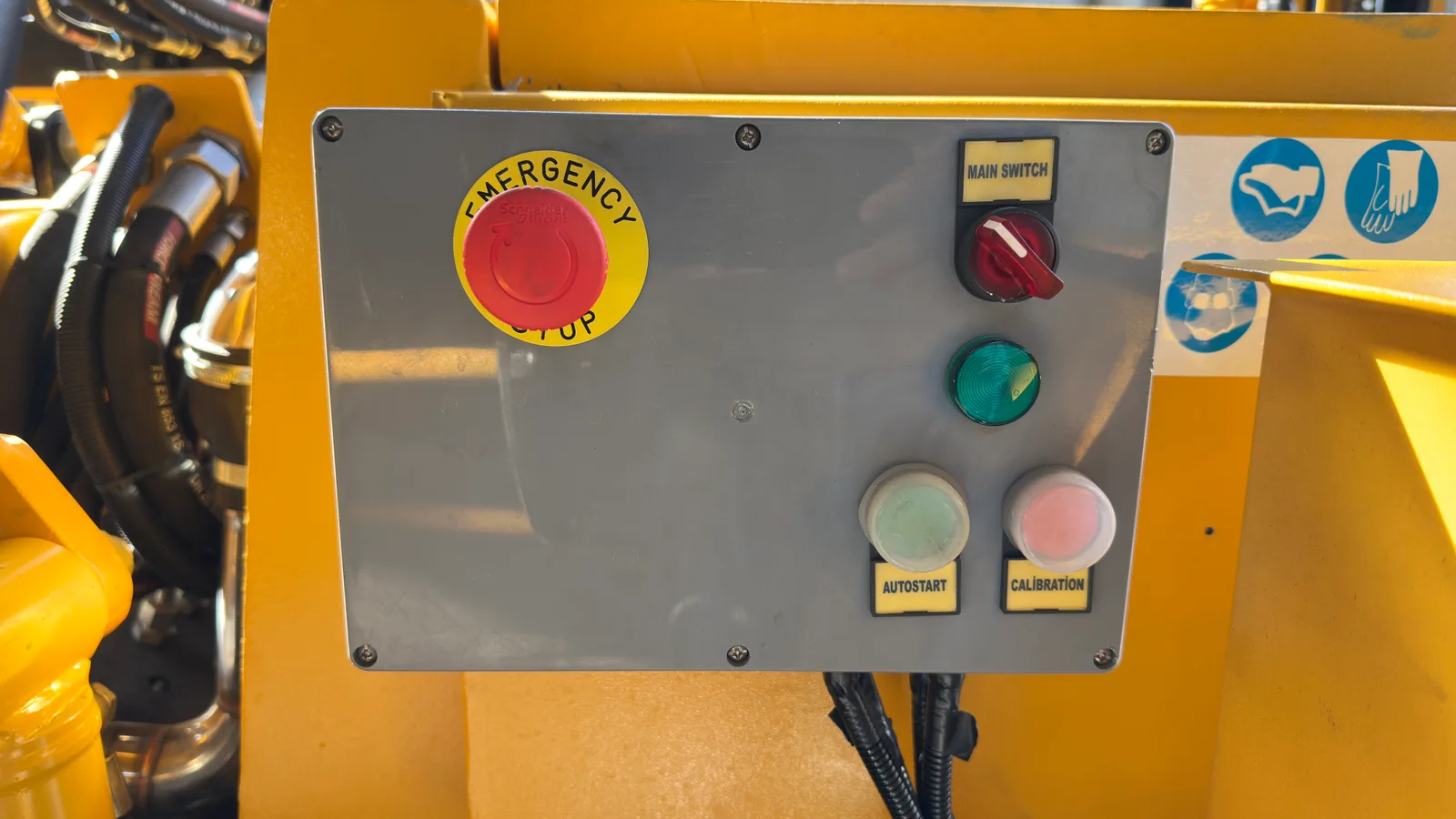
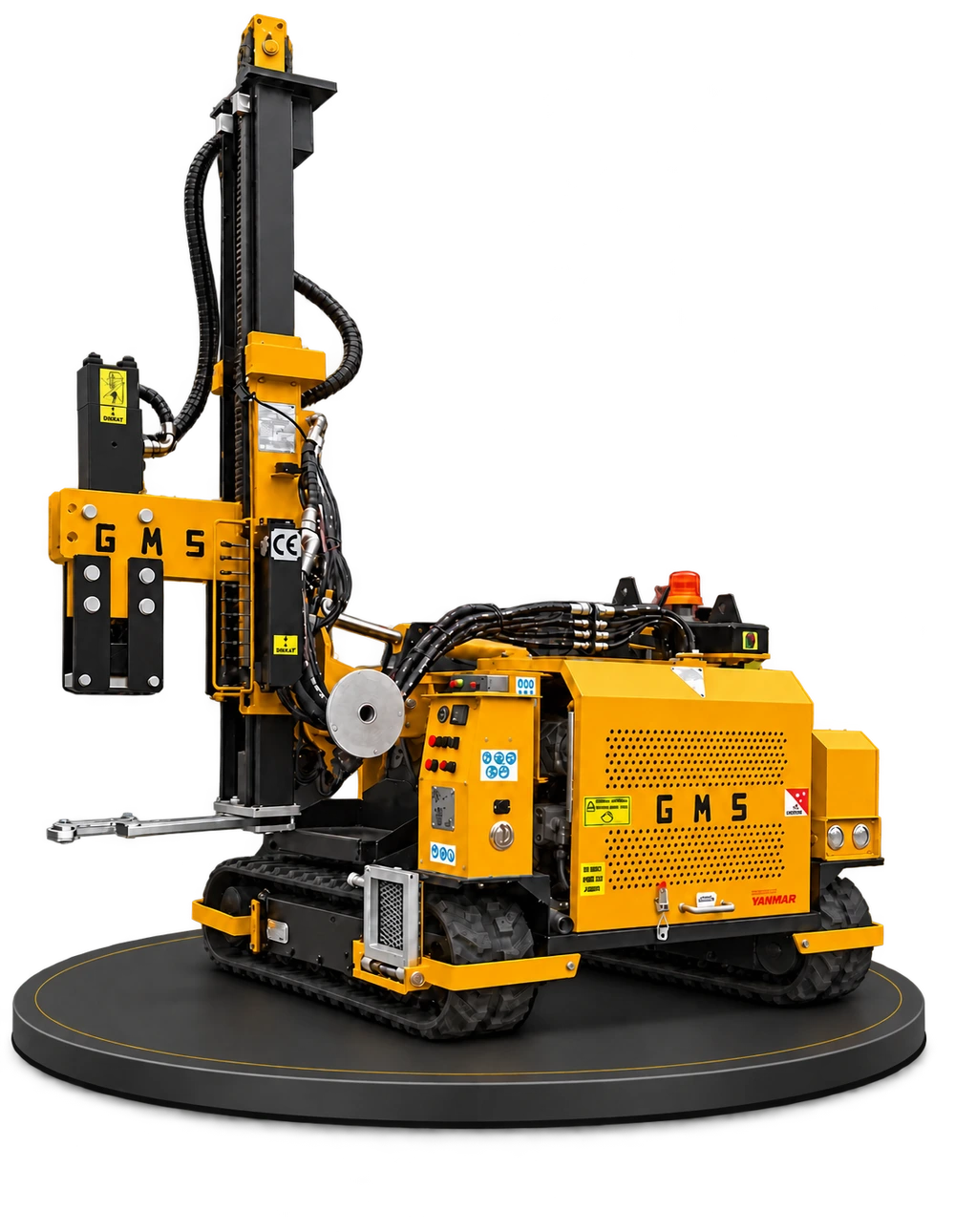
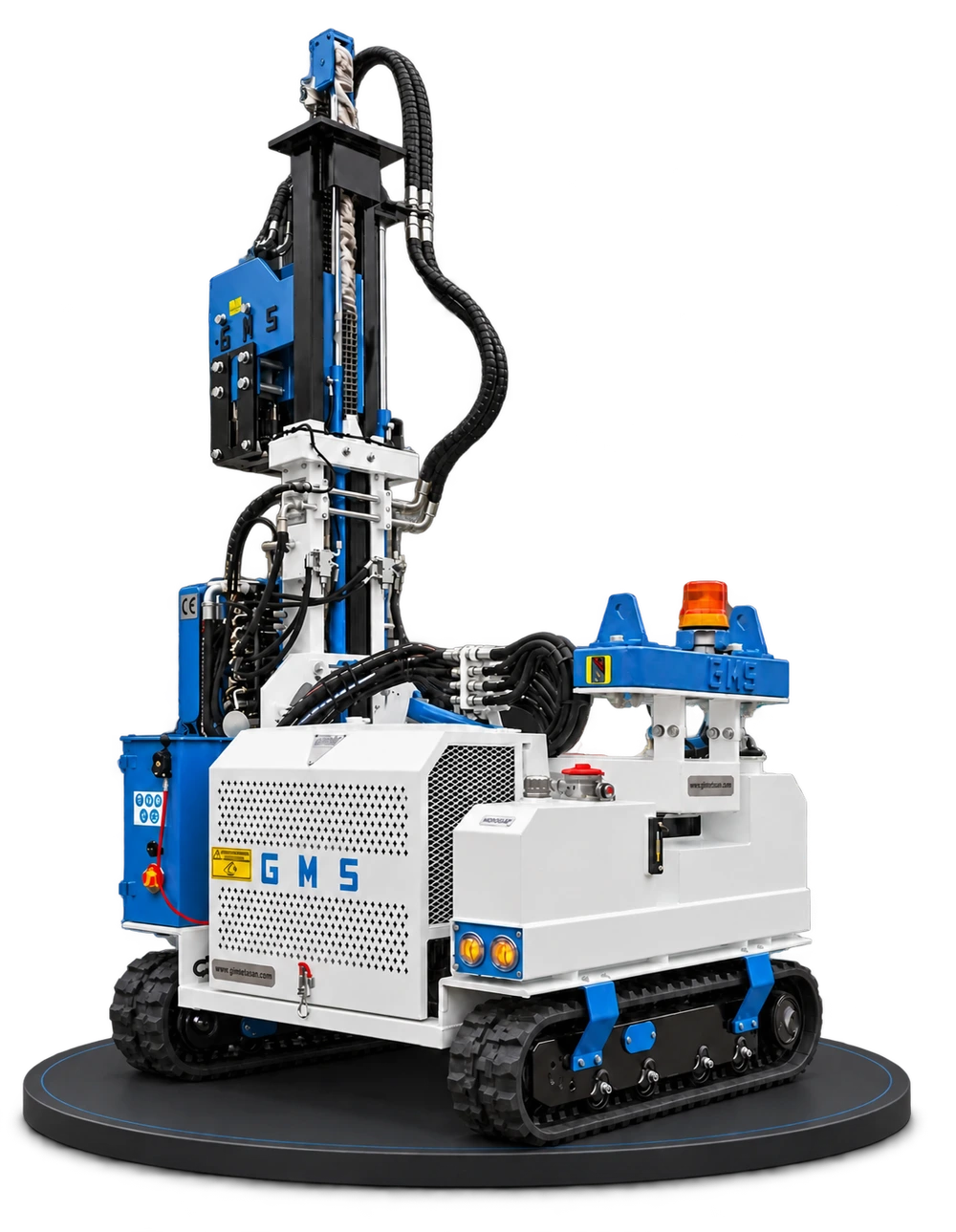
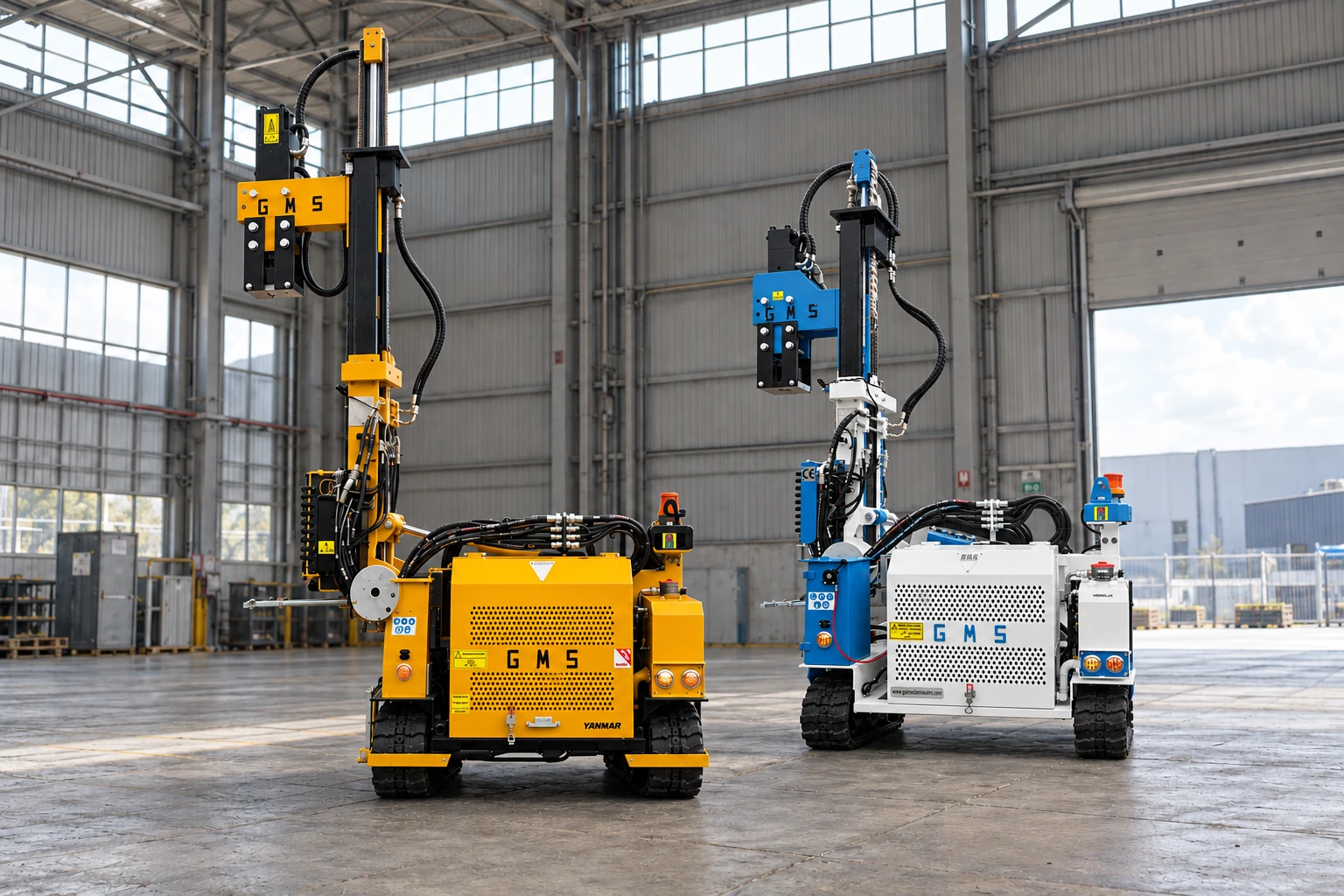
Suitable pile driving equipment, accessible controls and orderly site movement can make the operator's repetitive tasks easier. When assessing GMS GES and GMS4000, observe these benefits on the relevant project. A fixed savings percentage cannot be applied to every site.
Scheduled maintenance also supports operational continuity. YANMAR highlights the role of daily checks and regular maintenance in preserving performance. Exact maintenance intervals must come from the applicable product manual.
- Track positioning, pile driving and inspection times separately.
- Include the reasons for delays in the daily report.
- Monitor the rework rate and accepted installations.
- Plan the machine together with material supply and the surveying team.
Source: YANMAR — Daily checks and periodic maintenance (opens in a new tab)
A more productive site starts with a better organized workflow. Measure the machine's contribution through total time, acceptance quality and unit cost.
Sources and further reading
The scope of the standards is summarized here. In practice, the project specification, applicable editions of the standards and the assessment of the responsible engineering team take precedence.