Post driving in hard and variable ground: when should predrilling be considered?
Slowing or stopping during pile driving may indicate a need to reassess the ground. Predrilling should be treated as a change in method that may affect foundation behavior, not merely as preparation that speeds up the work.
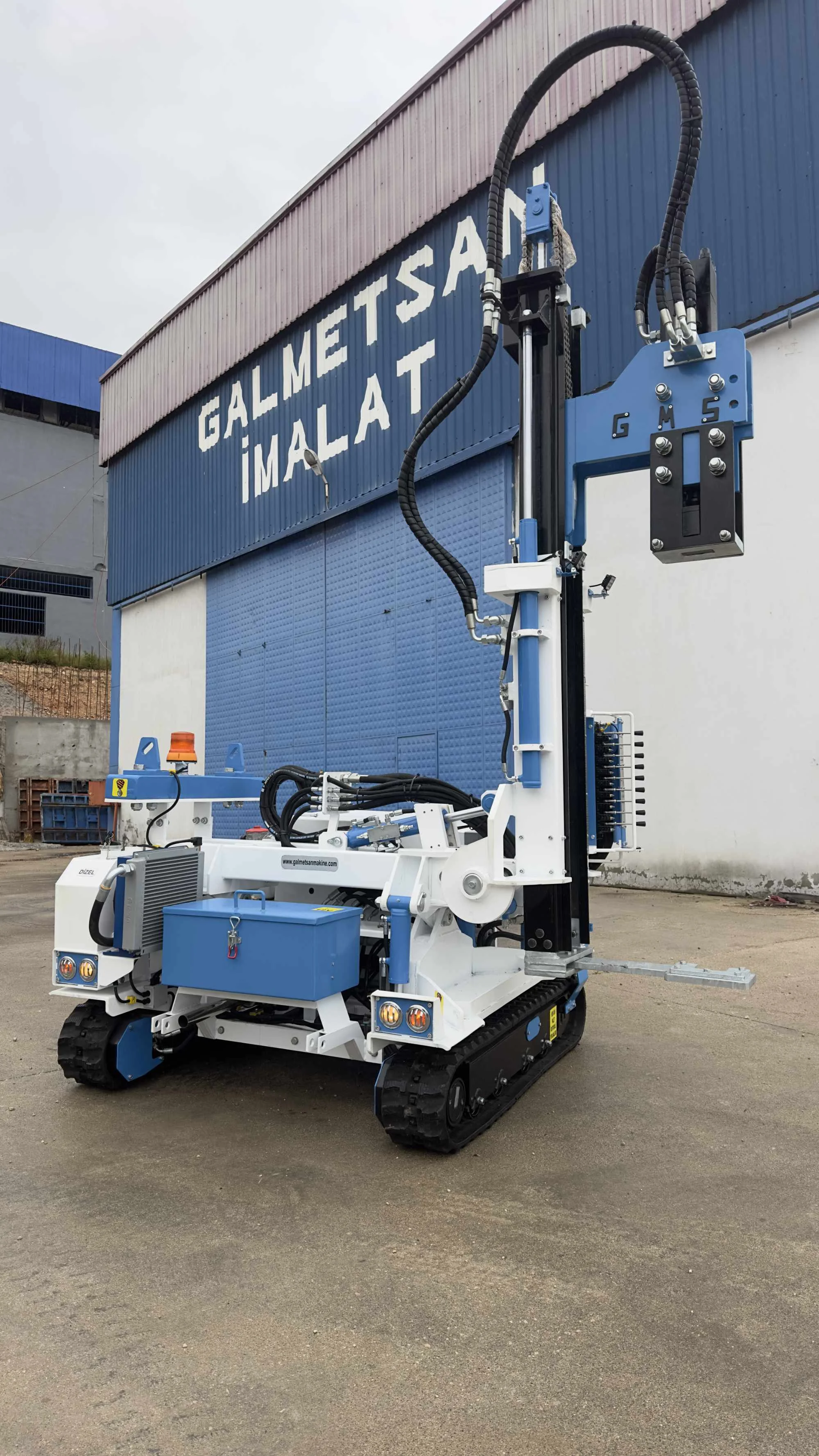
First record what happens on site
On large sites, a profile that advances easily at one point may struggle a few meters away. Hard layers, boulders, changes in fill or incompatible equipment may be responsible. Do not assume the ground is the sole cause before assessment.
Record the steel post ID, achieved depth, working time, profile condition and machine observations. This information helps design and installation teams assess the same event. If expected progress is not achieved, use predefined installation criteria to decide whether to continue or stop.
Predrilling changes interaction with the ground
The FHWA driven pile foundation guide explains that predrilling can create additional ground disturbance which must be reflected in resistance assessment. This principle requires a project specific review for solar posts too. Large foundation examples in the guide should not be used directly as a solar post recipe.
Hole diameter, depth and any supplementary treatment are engineering decisions. No single predrilling dimension is suitable for every profile. Easy insertion after predrilling does not alone verify the tensile or lateral load behavior expected in the design.
Source: FHWA — Design and construction of driven pile foundations, Volume I (opens in a new tab)
Assess the alternative method in a representative trial
If a method change is being considered, define the profile, equipment and site zone. Record the conditions for which the trial result is valid. The team responsible for foundation design must determine the necessary load tests and acceptance criteria.
Extending a solution that works at one point across the entire site can cause costly errors. Reassess the method particularly when moving between ground zones. Reflect the approved solution in installation drawings and the quality plan.
Clarify the scope of machinery and auxiliary equipment
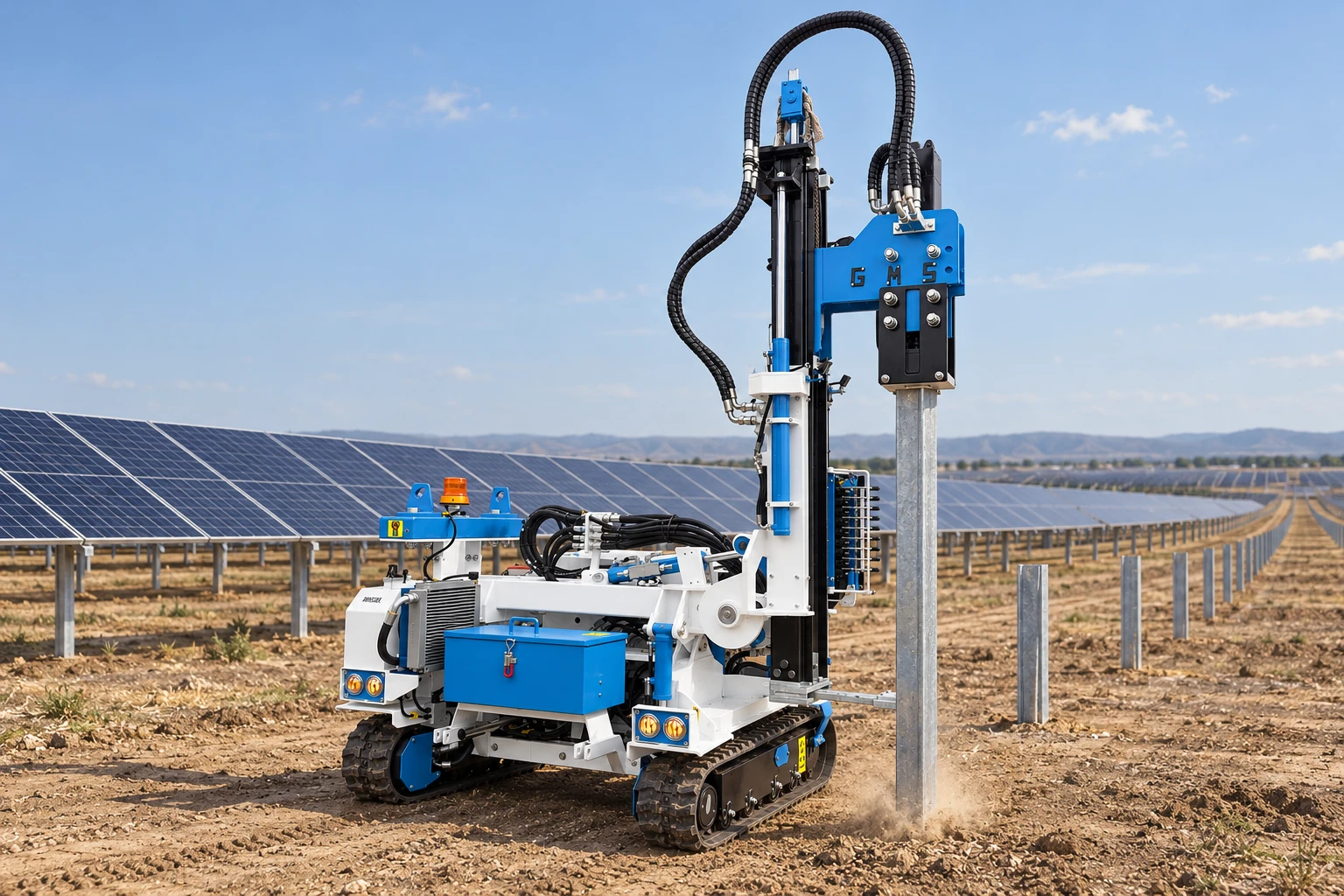
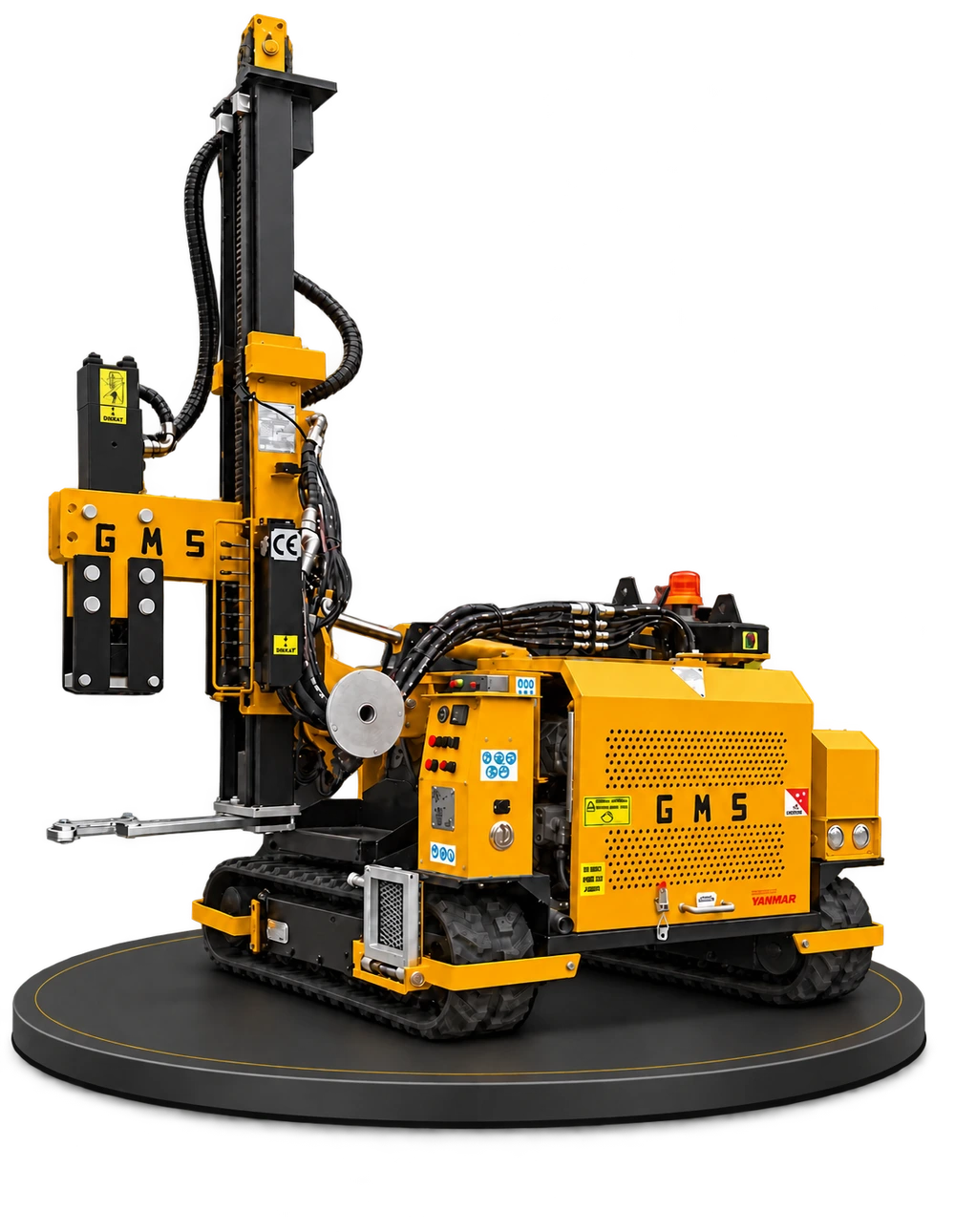
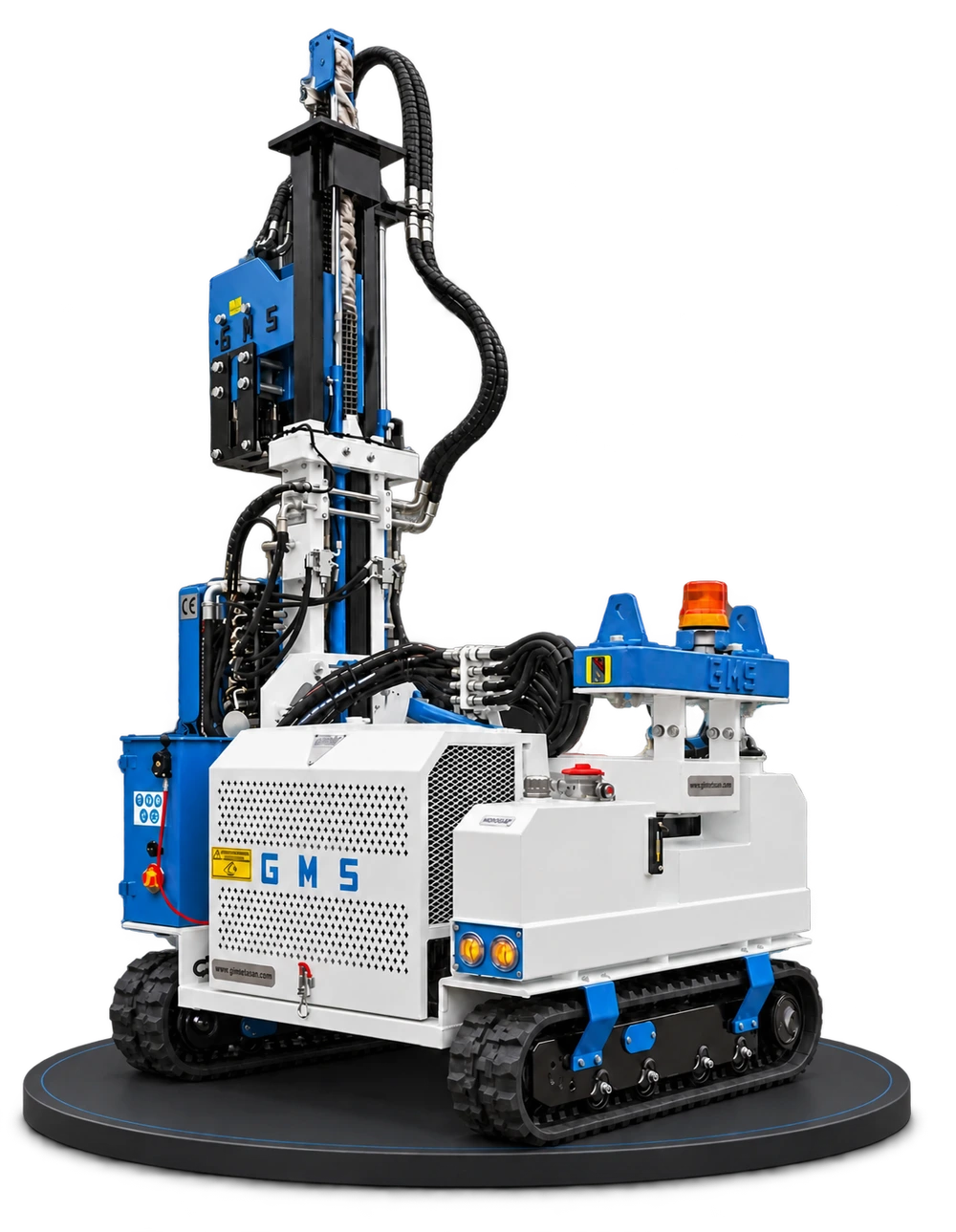
Discuss the required working head and any auxiliary equipment for GMS GES based on the project profile and selected method. A machine's ability to drive posts does not mean its standard equipment can perform every drilling operation or ground solution. Define the scope clearly in the quotation.
The schedule can distinguish normal pile driving points from those needing special treatment. Points awaiting technical decisions remain visible, are not reported as complete, and daily targets can be adjusted to site conditions.
- Record a point that will not advance with its location and profile information.
- Obtain design approval for the method change.
- Complete the required testing and acceptance steps.
- Include the approved method and equipment in the site plan.
Assess predrilling through foundation behavior as well as ease of pile driving. Dimensions and acceptance methods are determined for the specific project.
Sources and further reading
The scope of the standards is summarized here. In practice, the project specification, applicable editions of the standards and the assessment of the responsible engineering team take precedence.