
Planning slopes, drainage and access roads on solar farm sites
A post driving schedule cannot be based on panel rows alone. Rainwater flow, elevation differences and machine access also determine the installation sequence.
Add terrain conditions to the layout plan
Natural slopes, fill areas and low points should be visible on the site plan. Choosing the shortest route alone is insufficient for machine access. Assess the bearing conditions along the route, turning space and the movement of other teams together.
Compare pile driving locations with planned cable trenches and drainage lines. Later excavations approaching completed posts may require reassessment. Teams working from the same current layout plan can identify these conflicts earlier.
Drainage also affects the area around foundations
Uncontrolled surface runoff and scour can affect the ground around solar equipment and pile foundations. The US Department of Energy identifies water management and maintenance of site drainage as important measures for reducing these effects. Solutions should be designed for the site's topography and water flow.
Temporary roads and material stockpiles created during installation must not block water passages. Review the drainage plan instead of diverting standing water after rain arbitrarily toward another row. Temporary site arrangements deserve the same attention as the permanent system.
Source: US Department of Energy — Mitigating flood and erosion effects on solar sites (opens in a new tab)
Arrange access roads to match the work sequence
Teams may have to wait for each other if material distribution, post driving and superstructure assembly take place simultaneously in the same narrow corridor. A plan divided into work zones clarifies which team uses each road and when. It can also reduce the need to travel over completed work.
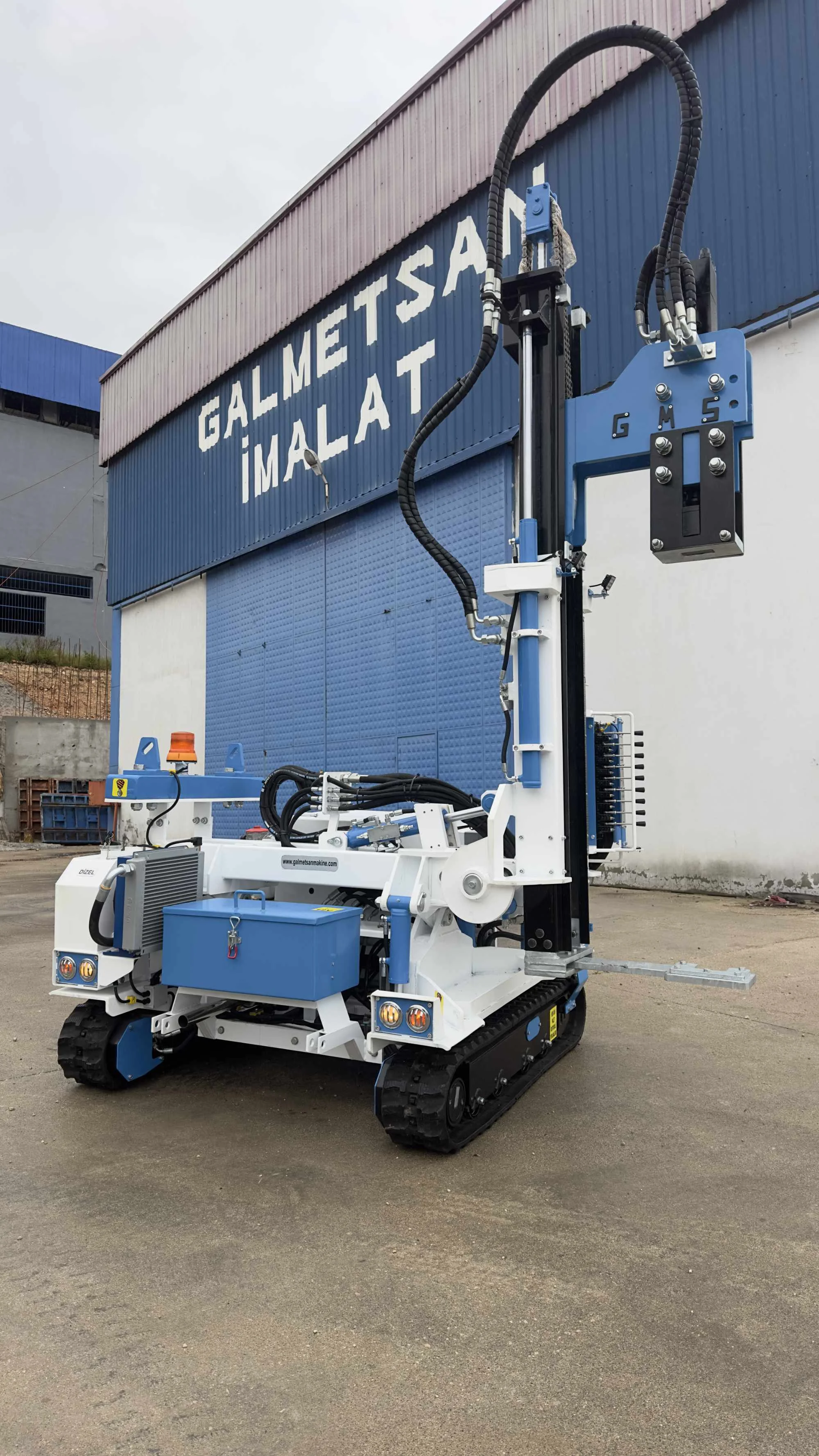
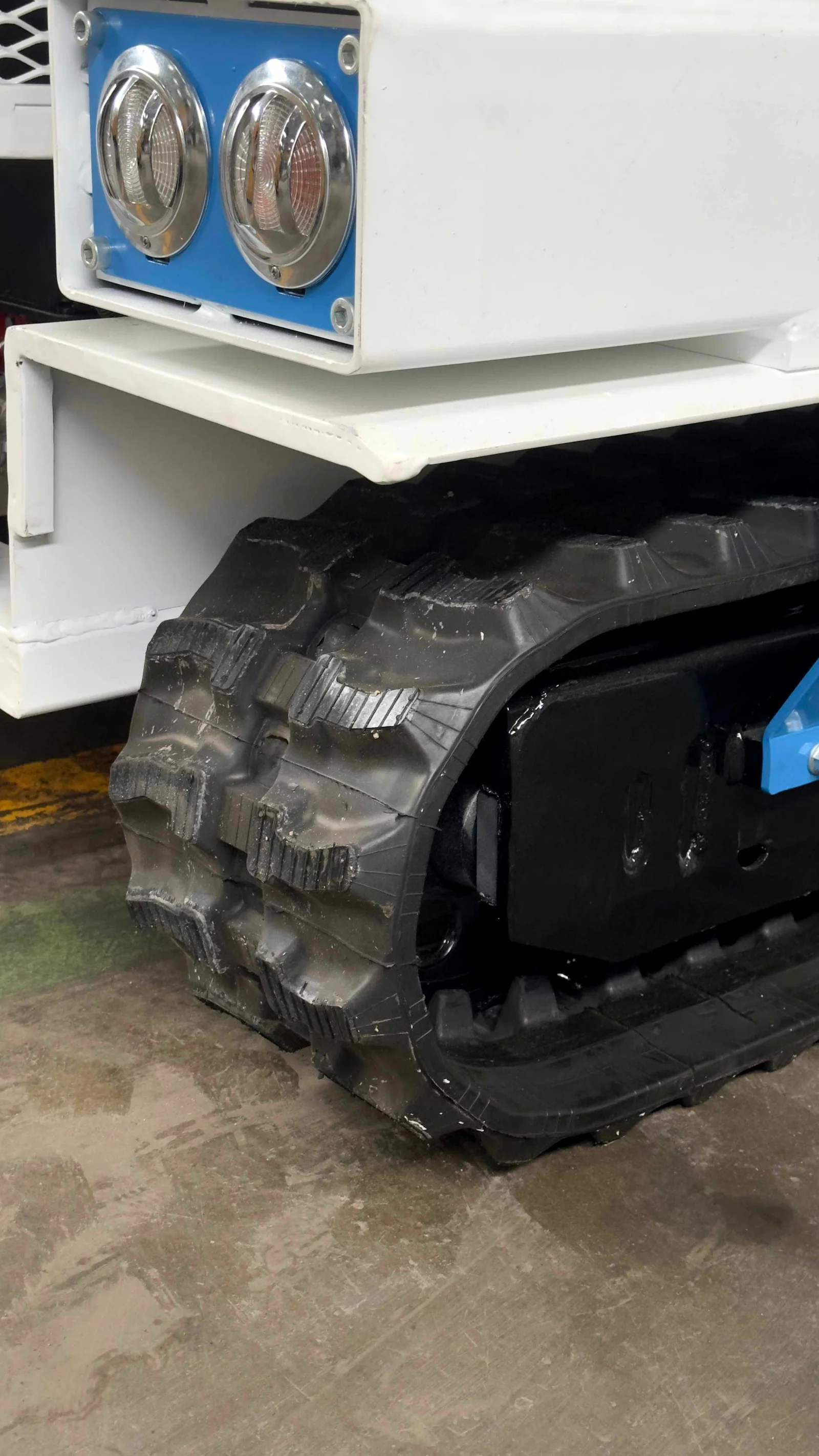
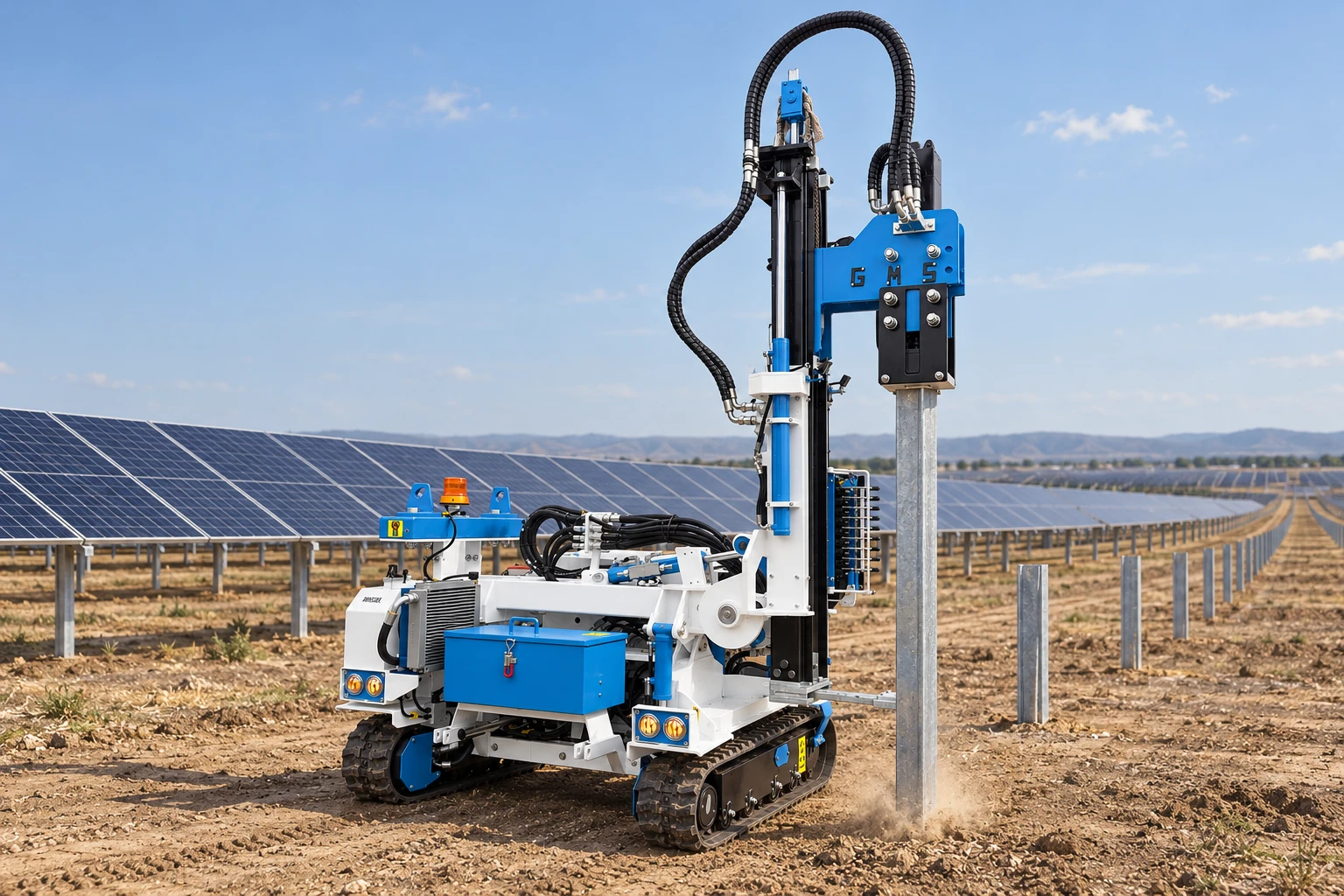
For GMS GES, separately check that the terrain slope and ground conditions fall within the machine's operating limits. Tracks do not mean the machine can operate on any slope or ground. Assess usable routes and working positions together with the manufacturer's instructions.
Update the plan when conditions change
Rain, filling operations or a new trench can change a previously suitable crossing. Reviewing the work area at the start of a shift allows the daily plan to reflect current conditions. Assess the site first if an area's suitability is uncertain.
Elevation changes, access restrictions and standing water locations should be shared beyond the operator's notes. Giving surveying, infrastructure and superstructure teams access to the same information helps subsequent work proceed in the correct sequence.
- Mark drainage lines and low lying areas.
- Plan access routes together with material distribution points.
- Reassess ground and access conditions after rain.
- Share site plan changes with all teams.
A good solar site plan shows water and machine movement alongside post locations. Update the installation plan as site conditions change.
Sources and further reading
The scope of the standards is summarized here. In practice, the project specification, applicable editions of the standards and the assessment of the responsible engineering team take precedence.